
Cleaning · Auckland
That musty smell is mould
When a heat pump cools, it condenses water on the indoor coil. That moisture sits in the dark with the dust that got past the filter, and mould grows on the barrel fan and the fins. Every time you switch the unit on, it blows into the room you're breathing in.
Rinsing the filters doesn't reach it. The growth is deeper in, on parts you can't get to without taking the unit apart. That's what a proper clean is.
Book a clean
Tell us how many units and where you are.- Full strip-down, not a filter rinse
- All six brands
- Furniture and floor covered
- All Auckland suburbs
Why it matters
You're breathing whatever is inside it
A heat pump is a fan pointed at your living room. Anything growing on the parts the air passes over goes into the room with it. That's why a dirty unit is worth dealing with even if it's still heating fine.
The smell goes
The musty hit when you first switch it on is the mould. Remove the growth and the smell doesn't come back until it regrows.
Better for allergies
Mould spores and accumulated dust blowing into the room are worth removing if anyone in the house has asthma or hay fever.
It runs better
A coil clogged with dust can't transfer heat properly. Clean it and the unit reaches temperature faster on less power.
What we actually do
The unit comes apart
A clean that doesn't involve removing the casing and the barrel fan isn't a clean, it's a filter rinse with a name on the invoice. Ours takes the indoor unit down to the parts that grow mould and treats them.
Every clean includes
- Floor and furniture below the unit covered before we start
- Casing removed and the indoor unit bagged
- Barrel fan removed and cleaned, where most of the mould lives
- Coil chemically cleaned and rinsed through
- Drain tray and line flushed and flow tested
- Filters washed, dried and refitted
- Antibacterial treatment through the indoor unit
- Reassembled, run tested, and everything taken away with us
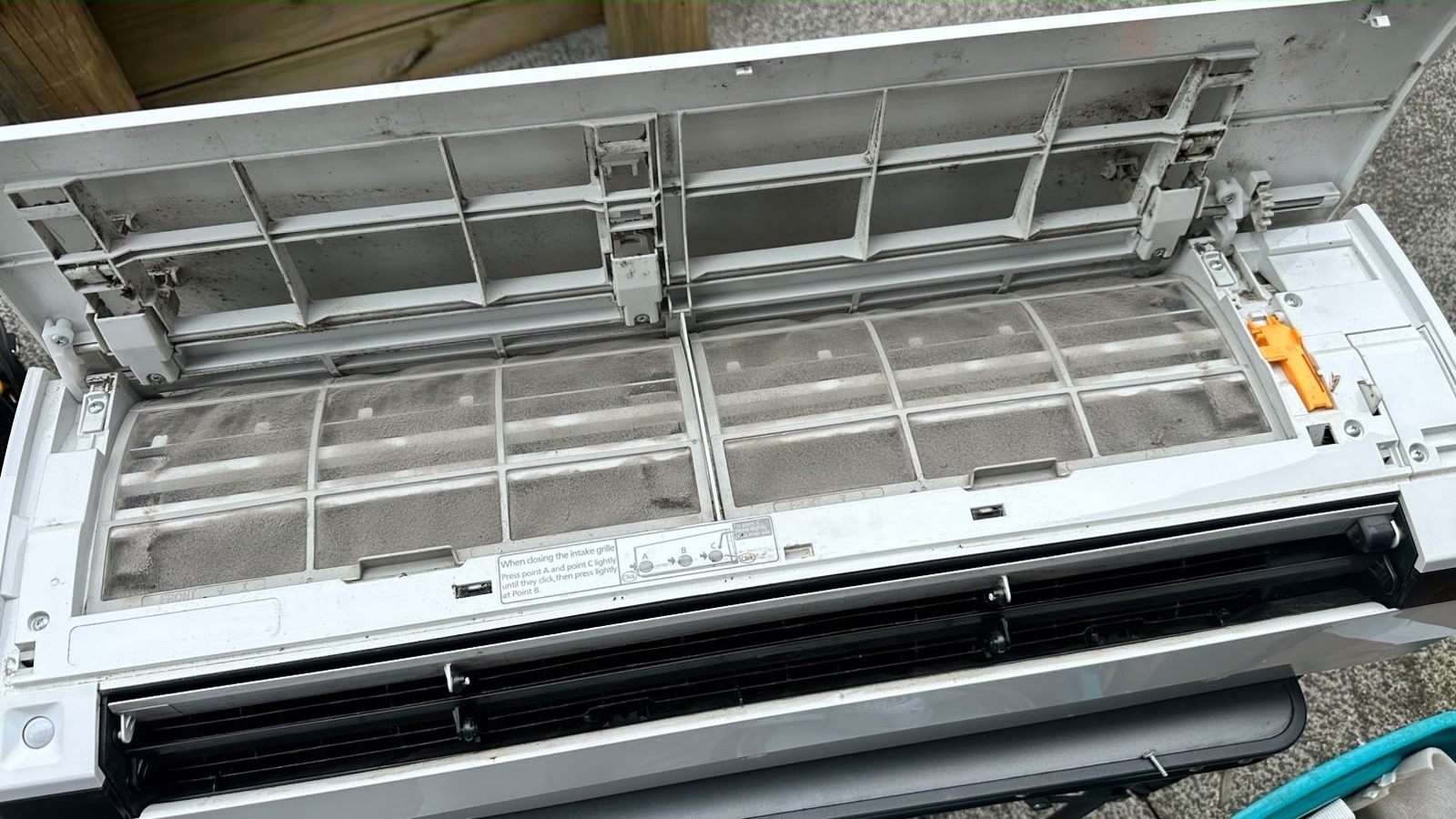
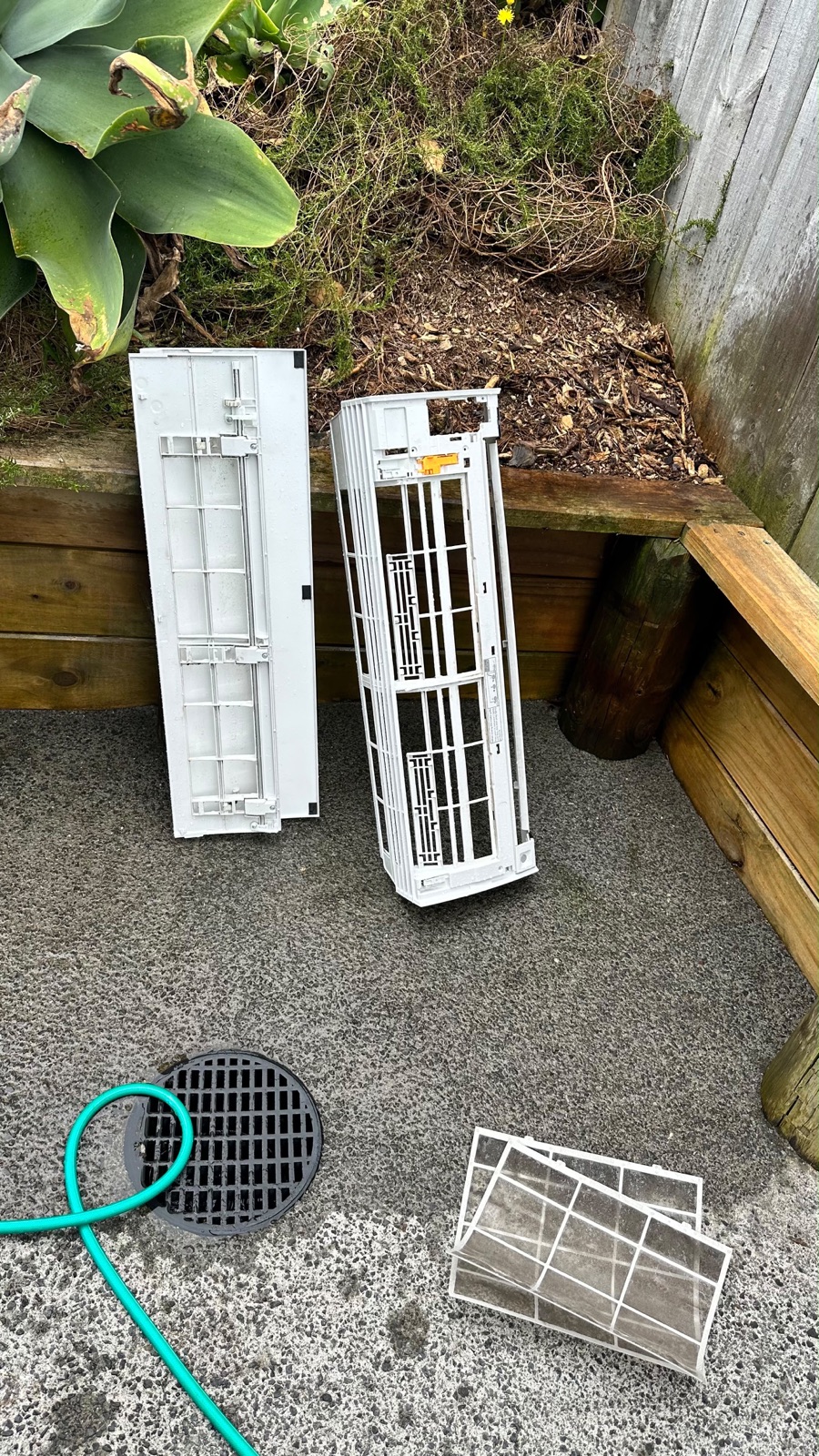
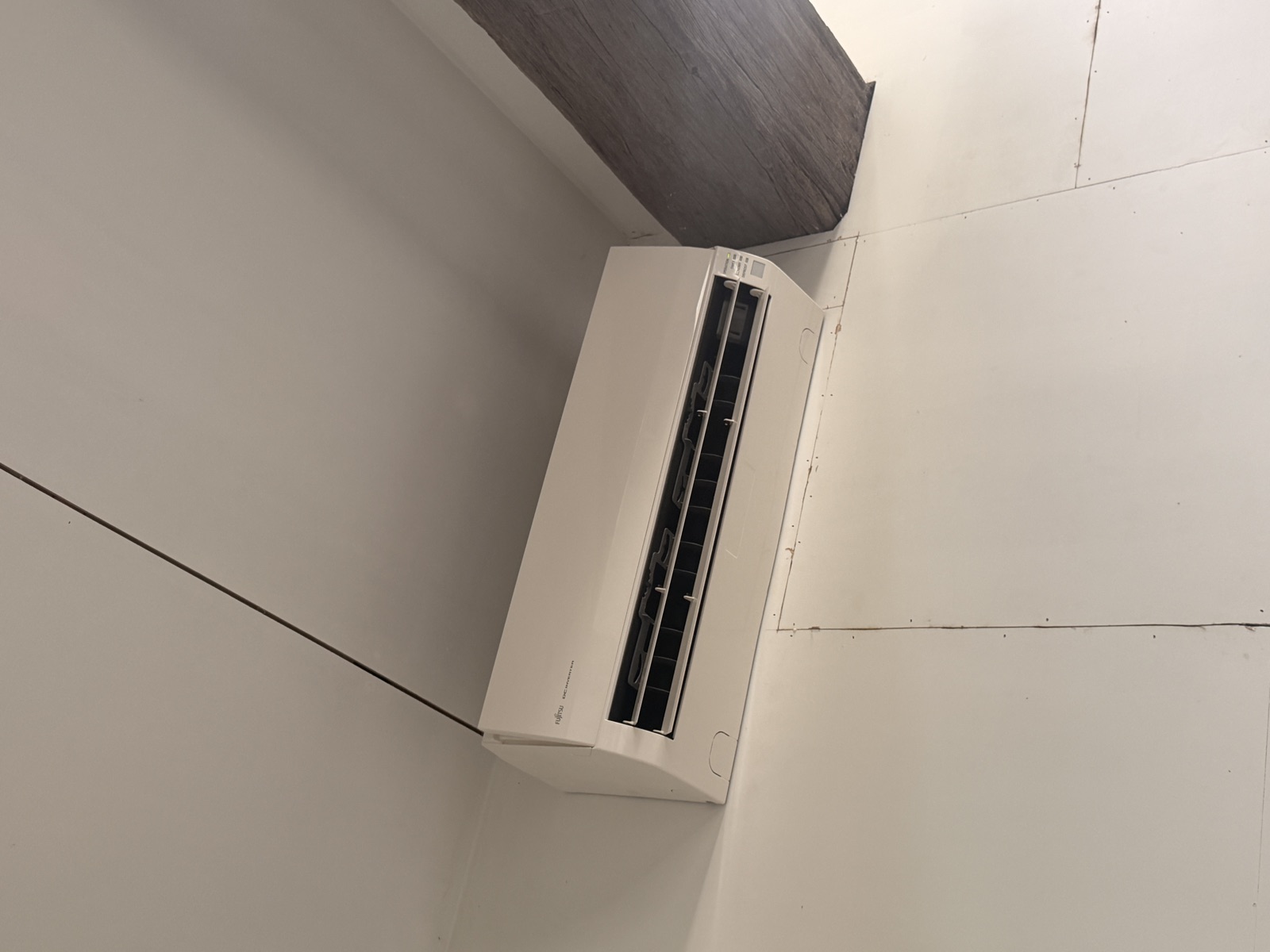
Before and after
What a strip-down actually looks like
The filters are the part you can see. Everything comes out, gets washed, and goes back on the wall the same visit.
Questions
About cleaning
How often does it need cleaning?
Can't I just wash the filters myself?
Is a clean the same as a service?
How long does it take and how messy is it?
Do you clean ducted systems?
Book a clean
An hour per unit, and the smell goes with us.
Cleaning across Auckland — every suburb, from the Hibiscus Coast down to Franklin.